Every quote conversation reaches the same question about ninety seconds in: how many shirts can you actually do? The honest answer is a range with conditions attached, and the conditions are the useful part.
How many shirts per hour a live printer produces depends far less on the machine than most planners expect. The press is rarely the bottleneck. Your guests are. Here is the arithmetic we use to size a station, and where the numbers quietly leak.
The headline numbers, and what they assume
A staffed heat press or DTF transfer station finishes somewhere around 60 to 90 pieces an hour. Live screen printing lands in similar territory for a one or two colour design and pulls ahead on a long single-design run, because once the screen is set the pulls are fast — the cost is setup time per colour. Live embroidery is a different category entirely at roughly 6 to 12 minutes per piece, which is five to ten an hour and is priced as a premium moment rather than a volume solution.
Those figures assume a warm press, a garment already chosen, a design already selected, and a person waiting. Remove any one of those and the number falls.
Where the seconds actually go
Break the station into five steps and time them honestly:
- Pick. The guest chooses a design and a size. This is the longest step and it has nothing to do with equipment. Fifteen to sixty seconds, and it scales with the number of options you offered.
- Stage. A crew member pulls the blank, squares it on the platen, and positions the transfer. Twenty to thirty seconds.
- Press. The actual cycle. Often under a minute, sometimes far less.
- Peel and finish. Peel, second press where the process calls for it, cool.
- Hand-off. Fold, bag, thank, next.
The station runs at the pace of its slowest step, and on a well-run crew that step is almost never the press. It is the pick. That is why two presses do not double your output unless you also double the staging table and the hands working it — a second press fed by the same one person is a second press that spends half its life idle.
Guests do not arrive evenly, so stop planning as if they do
Here is the number that ruins otherwise good plans. Attendance at a merch station is not a flat line across your window. At a conference it spikes hard in the twenty minutes after a keynote lets out. At a wedding it spikes after the first dance. At a festival it spikes when the headliner is between sets. A large share of your total demand can land inside the first forty-five minutes the station is visible.
So plan capacity at about 70 percent of the rated hourly rate, and check the peak separately from the total. Worked example: 300 guests, a station open three hours, planning at 70 percent of 90 pieces an hour gives roughly 63 an hour, or about 190 pieces. If you expect 80 percent participation — 240 pieces — you are short, and no amount of hustle closes a 50-piece gap in the last twenty minutes when the room is emptying.
The two real fixes are a second station or a shorter, harder-marketed window that concentrates demand where you have staff. Extending hours rarely helps, because the guests who wanted a shirt already left with or without one.
Five levers that cost nothing
- Cut the menu to three designs. Choice paralysis at the front of a line is the single most expensive thing at your event. Three good options beat eight.
- Pre-sort sizes into labelled bins. Digging through a folded stack for a womens medium is fifteen seconds you pay for on every guest.
- Use a ticket or QR handoff. Guests pick, get a number, go enjoy the party, and collect later. It converts a queue into a pickup counter and smooths your curve for free.
- Print the base ahead, personalise live. If your art is fixed, have the shirts printed in advance and make the live moment a name, number or patch. Personalisation stations run faster and the perceived value is identical.
- Put a staffer in the line, not just behind the table. Someone walking the queue taking size and design decisions turns the pick step into something that happens in parallel instead of at the front.
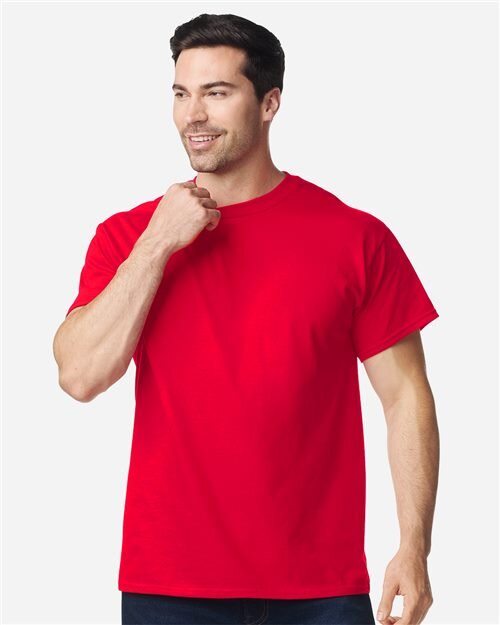
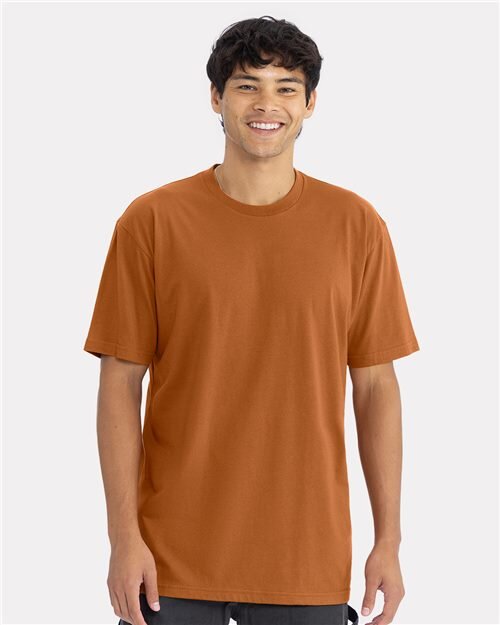
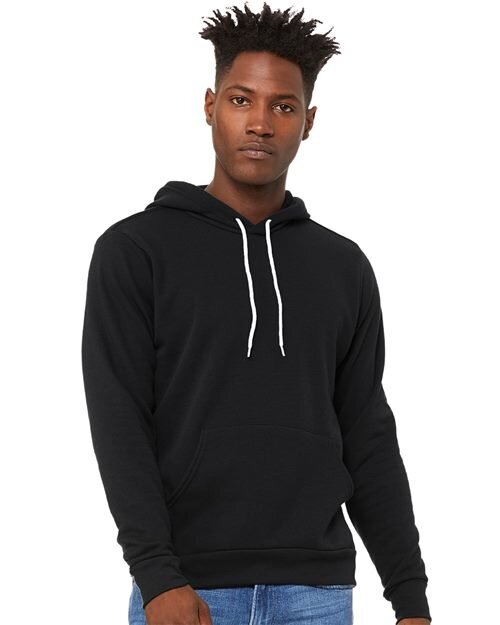
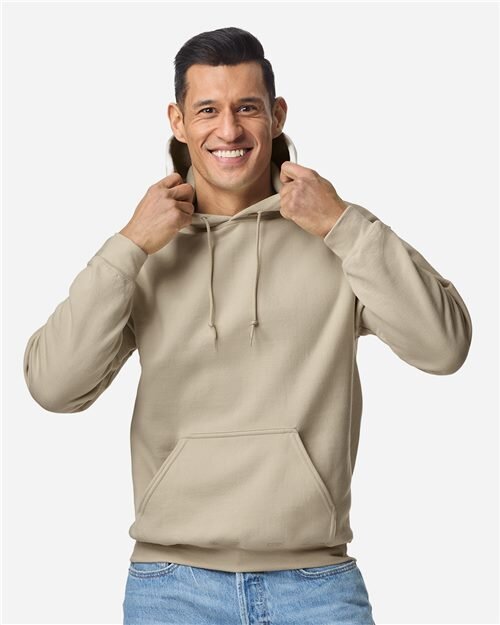
Order roughly 1.05 to 1.15 pieces per expected guest so you have size flexibility without a mountain of leftovers. Our guide to choosing shirts covers the size curve in more detail.
When live printing is the wrong answer
If you need 800 finished pieces inside two hours, live printing is not the right tool and anybody who says otherwise is selling. That volume in that window wants pre-printed stock, distributed from a table by people who are not operating machinery.
The better version of that event keeps the live element as the spectacle rather than the supply. Print the run ahead, then put one press on the floor personalising a sleeve, adding a name, or running a limited alternate design. You get the theatre, the photos and the crowd, and nobody is standing in a forty-minute queue for a free shirt. Budget-wise, the two approaches also land differently — the event merch budget guide walks through the tradeoff, and pricing shows what a staffed station includes.
Frequently asked questions
How many shirts can one live printing station do in an hour?
A staffed transfer or heat press station finishes roughly 60 to 90 pieces an hour once it is warm and the queue is steady. Live screen printing is comparable and pulls ahead on long single-design runs. Live embroidery is a different animal at about 6 to 12 minutes per piece, so five to ten an hour.
How do I work out how many stations I need?
Take your guest count, multiply by the share you expect to participate, then divide by 70 percent of the rated hourly rate times the hours the station is genuinely open. If the answer is more than about one and a half stations, add a second press rather than extending hours, because guests leave and hours do not stack.
What slows a live printing station down the most?
Guest decisions, not the press. Choosing a design, choosing a size and finding the right blank consume more seconds than the press cycle does. Cutting the design menu to three options and pre-sorting sizes into labelled bins routinely recovers 15 to 25 percent of throughput without any extra equipment.
Give us three numbers and we will size it
Headcount, hours the station is open, and what else is happening in the room during those hours. That is enough for us to tell you how many presses you need and whether you are about to over-order blanks. Request a quote or call (562) 614-4800.