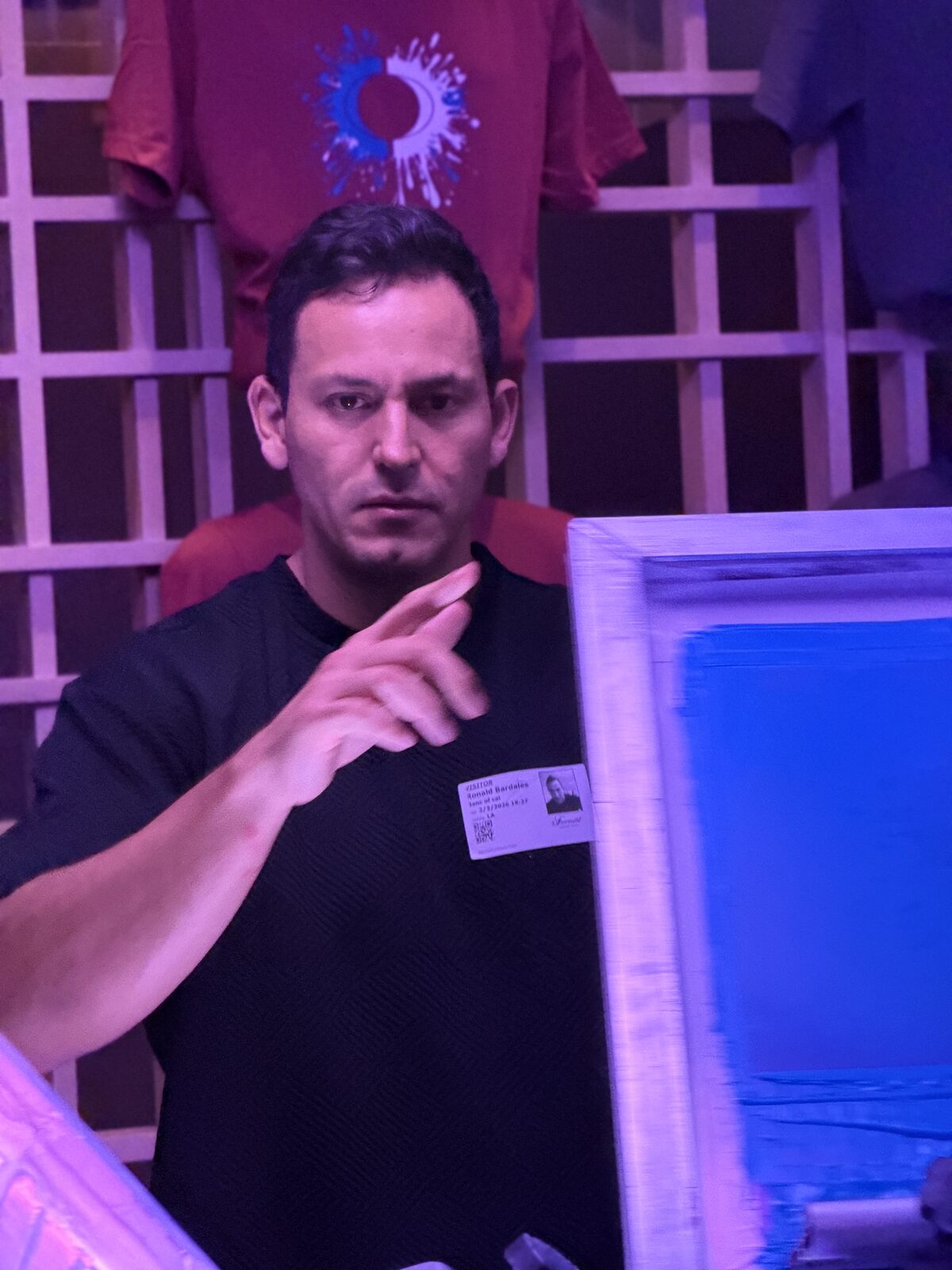
Somewhere between the bounce house and the photo booth, a better party idea emerged: put a working print shop in the middle of the event and let guests watch their own shirts come to life. A t-shirt printing party works for a 9-year-old's birthday and a 500-person corporate bash for the same reason — humans cannot walk past a squeegee pull. Here's how to host one properly, from first email to last warm shirt.
Eight weeks out: lock the date and the vendor
Live printing crews book like caterers: spring and fall weekends go first. Reach out with three things — date, rough headcount, and city — and a good vendor will return an itemized quote within a day or two (we do 24 hours). Expect most full events to land between $5K and $15K depending on guest count, hours, and garments. If your party is smaller, ask about single-press builds; a 60-person backyard birthday doesn't need the conference rig.
Four weeks out: design the menu
The design menu makes or breaks the experience, and the counterintuitive rule is: fewer options, better party. Two to four designs is the sweet spot — enough choice to feel personal, tight enough that the line moves and every shirt looks intentional. Think in a small system: one big statement graphic, one smaller classy mark, maybe one inside joke. Your printer should art-direct this with you; bold one- to three-color designs print the most dramatically on a screen press, while full-color art and per-guest names run on a DTF station.
Three weeks out: garment math
Here's the formula we use internally: expected redemptions = guests × 0.7 (not everyone wants a shirt; many want two — it averages out around 70–80%). Your printer brings a size curve — XS through 4XL with extra weight on M/L/XL — so guests get their actual size instead of a compromise. Decide your tiers now too: tees for everyone is the classic; tees plus a hoodie tier for VIPs or the first 50 redemptions adds a fun scarcity game.
One week out: site check
A printing station needs three things: a level 10×10 ft footprint, two standard 120V outlets on separate breakers, and a way to roll carts from a vehicle to the spot. Walk the path once — gate widths, stairs, the sprinkler situation — and flag anything weird to your crew. Outdoors, plan overhead cover (canopy or tent) and skip the spot directly downhill from the slip-n-slide.
Party day: the rhythm
The crew arrives 60–90 minutes before printing starts and tests prints before guests notice. Then the loop runs itself: pick a design, pick a size, watch the pull, wear it warm — roughly two minutes per shirt, up to 60 shirts per press per hour. Hosts always ask where to schedule the station and the answer is: after the food, before the fade. Energy at a printing table peaks when guests are fed, social, and not yet looking for their keys.
The five classic mistakes
1. Too many designs. Twelve options means six-minute decisions and a stalled line. 2. Ordering shirts separately. Let the print crew supply garments — the size curve, the blank quality, and the backup stock are their problem, not yours. 3. Hiding the station. The press is entertainment; put it where the people are, not in the garage. 4. No kid plan. If children are coming, say so — youth sizes and earlier printing hours change the build slightly. 5. Skipping the test pull. Any crew worth hiring prints test shirts before doors; if yours doesn't, you hired a t-shirt cannon.
The short version
Book early, keep the menu tight, let the crew bring the garments, give the press a 10×10 spot with two outlets, and schedule it for the social peak of the night. Do that, and the printing station becomes the thing your guests describe to everyone who couldn't make it. Ready to date-check yours? The work order form takes two minutes.