The short answer
Pick live screen printing when you want the show: bold one- to three-color designs, that fresh-ink moment, and maximum durability. Pick DTF transfers when your art is full-color, photographic, or personalized with names. Many events run both — screen presses as the centerpiece, a DTF heat-press station for detail work. Both methods produce washable, retail-quality shirts on the spot.
What each method actually is
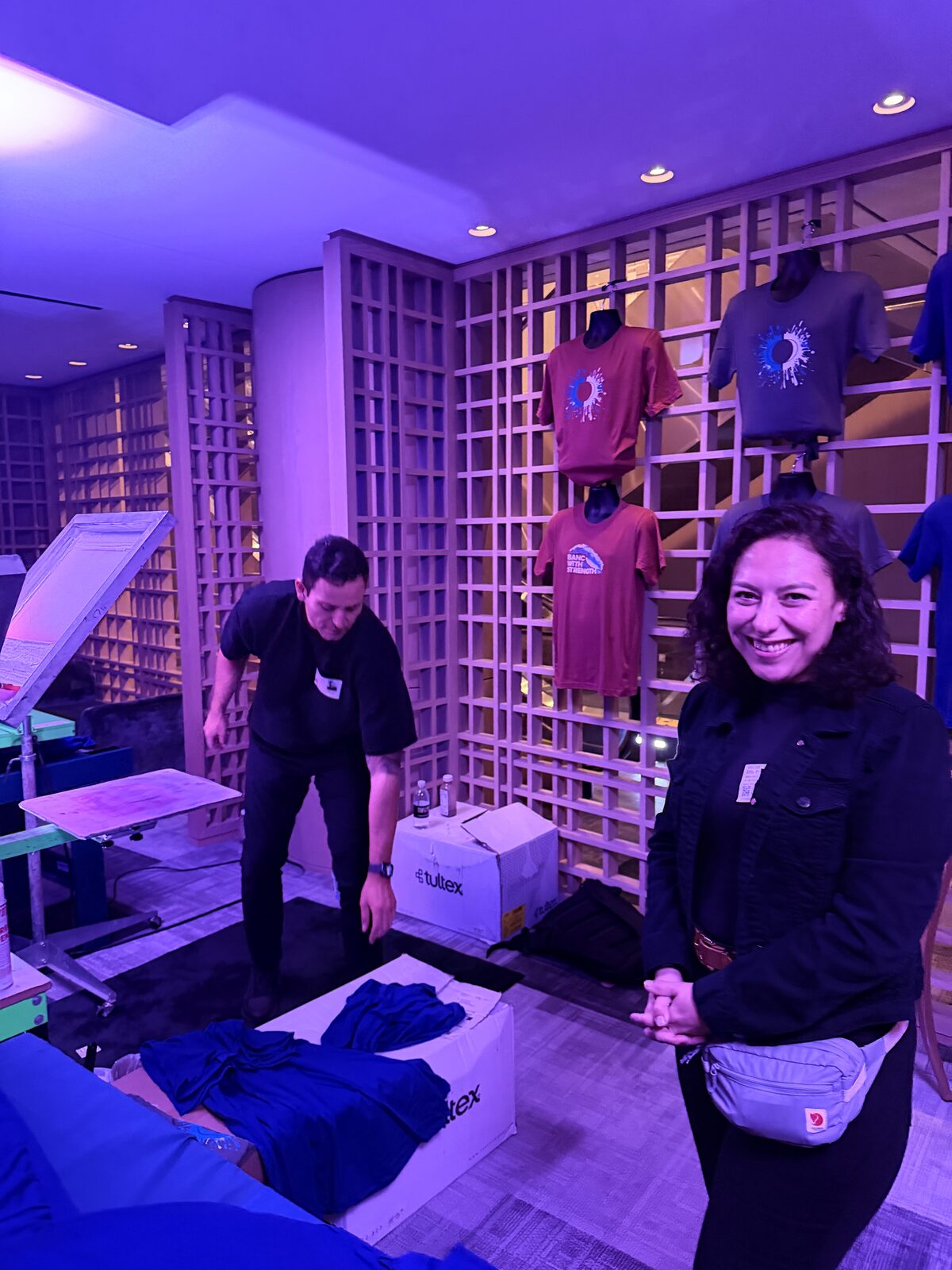
Live screen printing is the classic: a mesh screen burned with your design, ink flooded across it, and a squeegee pull that transfers the print straight onto the shirt, cured under a flash dryer in seconds. DTF (direct-to-film) works differently — your design is printed onto film with adhesive powder ahead of time, and at the event we heat-press the transfer onto the garment in about 15 seconds. Both are permanent, washable, and professional. Only one of them makes a crowd go "ohhh" when the screen lifts.
Where screen printing wins
Spectacle and saturation. The pull is genuinely theatrical — it's the reason people line up — and plastisol ink lays down thick, vivid color that survives a hundred washes. It's the better choice for bold logo art, vintage-style designs, and one- to three-color graphics, which is most event merch. It's also faster per piece at volume: up to 60 shirts an hour per press, all night.
Where DTF wins
Color count and flexibility. A DTF transfer reproduces gradients, photographs, and ten-color illustrations perfectly, because the complexity is baked into the film before the event. It also unlocks personalization — guest names, numbers, mix-and-match design elements — and switches designs instantly with zero screen changes. If your art direction is "our brand gradient plus each guest's name," DTF is your machine.
The comparison, side by side
| Factor | Live screen printing | DTF transfers |
|---|---|---|
| The show factor | Maximum — guests watch every pull | Moderate — quick press-and-peel |
| Best art | Bold 1–3 color designs | Full color, photos, fine detail |
| Personalization | Limited (fixed screens) | Easy — names, numbers, mix & match |
| Speed per station | Up to 60/hr | 40–60/hr |
| Design changes | Screen swap (minutes) | Instant |
| Durability | Excellent | Excellent |
The honest answer: most big events run both
Our favorite setup pairs two screen presses as the centerpiece — the theater, the line, the warm shirts — with a DTF station on the side for full-color art and personalization. Guests self-sort: the bold commemorative design comes off the press, the detailed art or name-drop comes off the heat press. Tell us what your artwork looks like, and we'll tell you in one email which method (or mix) it wants.