The short answer
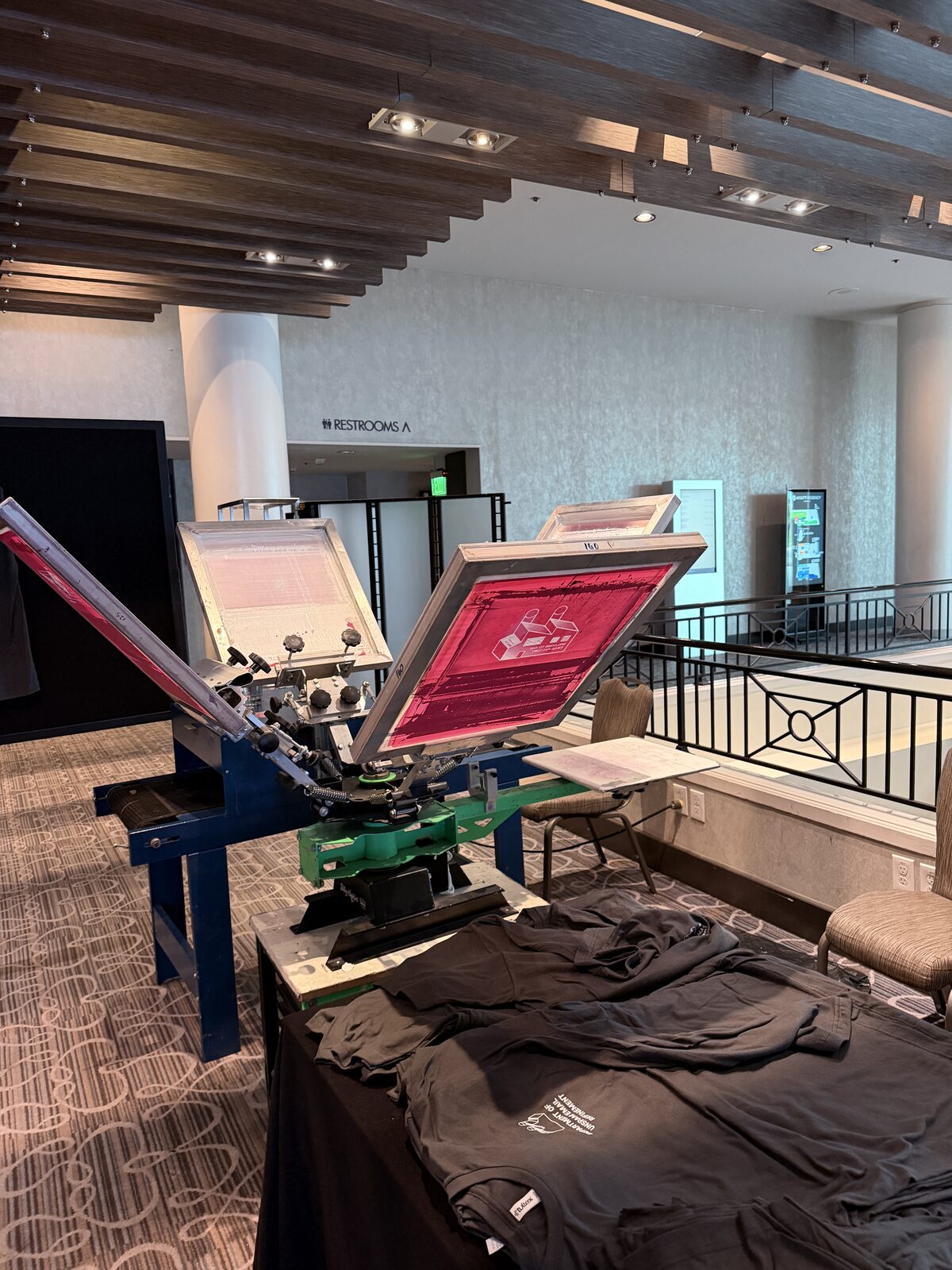
We roll real screen-printing presses into your venue, set up in about 90 minutes, and print shirts on demand. Guests pick one of your pre-approved designs and their size, a printer pulls the ink across the screen, the shirt cures under a flash dryer for about 30 seconds, and it's handed over warm. Each shirt takes roughly two minutes; each press clears up to 60 shirts per hour.
Before the event: art and garments
The show starts a couple of weeks before anyone sees a press. You send us your logo, theme, or rough idea, and we turn it into two to four print-ready designs — bold one- or two-color art that looks incredible coming off a screen. We burn each design onto its own mesh screen back at the shop in Fullerton, then order garments in your colors with a full XS–4XL size curve (youth sizes too, if kids are coming).
Event day: load-in and setup
Our standard crew is two printers running two presses. We arrive 60–90 minutes before doors with the presses, flash dryers, ink, screens, folded blanks, and tables. The whole station needs roughly a 10×10 ft footprint and two standard 120V circuits — the same outlets a food truck blender would use. Hotel ballroom, office lobby, festival lawn, backyard patio: if we can roll a cart to it, we can print on it.
The loop your guests run
Once doors open, the station runs a simple, weirdly hypnotic loop. A guest walks up and picks a design from the menu board. They pick their garment — tee, hoodie, or tote — in their size and color. The printer loads it onto the platen, floods the screen with ink, and pulls the squeegee in one smooth pass. The crowd leans in. The screen lifts, the print appears, and the shirt rides under the flash dryer for about 30 seconds to cure. Then it goes straight into the guest's hands, still warm. The whole exchange takes about two minutes.
Why it beats a merch table
A box of pre-printed shirts is a logistics problem: you guess sizes weeks early, you over-order to be safe, and half the run ends up in a closet. Live printing flips that. Nothing is printed until a guest claims it, so there are zero leftovers, every shirt is the right size, and the printing itself becomes entertainment — people genuinely gather three-deep to watch the squeegee pull. The shirt stops being swag and becomes a story.
Speed, scale, and the end of the night
Each press turns out up to 60 shirts an hour, so the standard two-press setup can clear over 100 an hour when the line is hot. For bigger crowds we add presses, printers, or a DTF transfer station for full-color art. When the event winds down, we break the station back into carts and disappear — teardown takes about an hour, and the only evidence is a room full of people wearing the same fresh ink.